Equipment
Every piece of equipment in the library, with the exercises you can do on it.
- Free weight
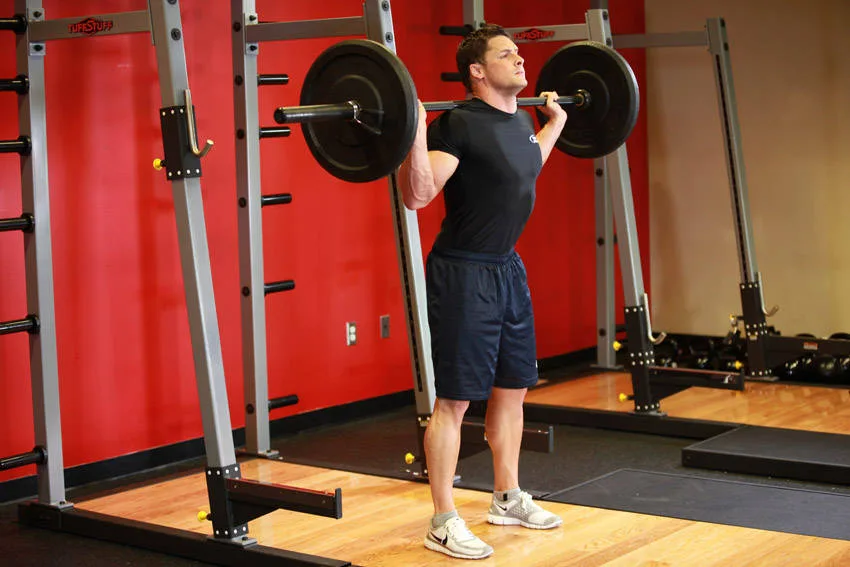
Barbell
180 exercisesA long bar loaded with plates at both ends. Because both hands hold the same bar, it carries the heaviest loads and anchors the compound lifts — bench press, squat, deadlift. Load steps down to 1.25 kg plates, which makes the barbell the clearest way to track strength progression. Its drawback is that the two sides can compensate for each other, letting a weaker side hide behind a stronger one.
- Free weight
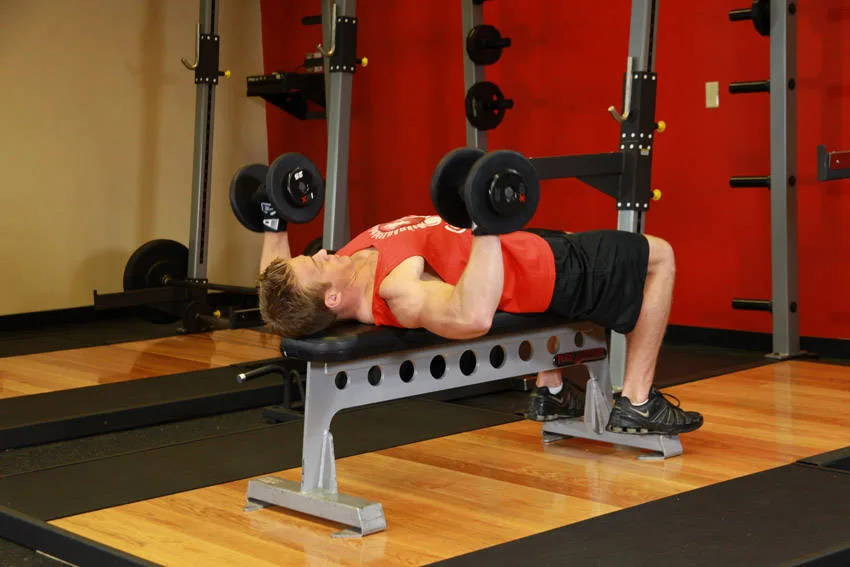
Dumbbell
136 exercisesA free weight held in one hand. Each arm works independently, so a dumbbell exposes and then closes a left-right strength gap that a barbell would hide. Range of motion is wider too — on chest and shoulder work the wrist and shoulder can follow their natural path. The trade-off is stabilisation: the same movement takes less weight with dumbbells than with a bar.
- Bodyweight
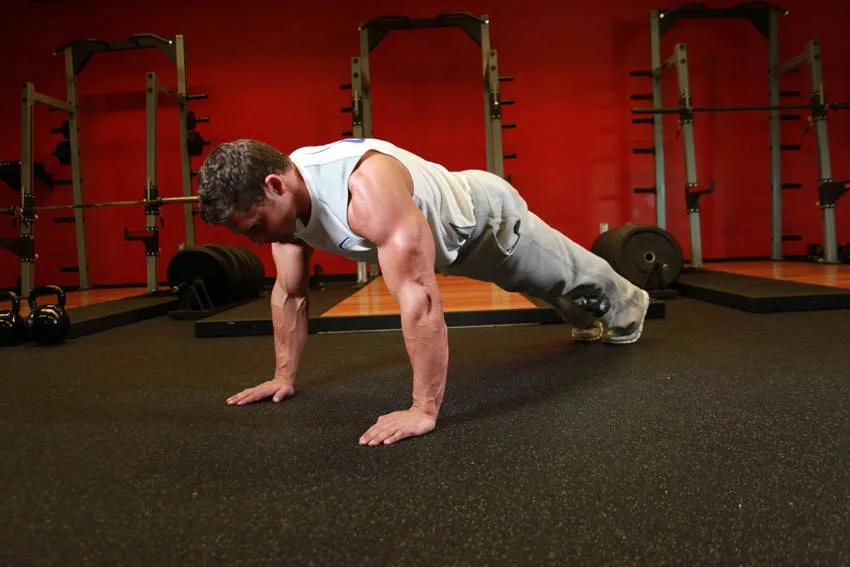
Bodyweight
122 exercisesMovements that need no equipment at all — your own body is the resistance. Push-ups, pull-ups, dips, squats and planks all belong here. Since you cannot change the weight, progression comes from changing leverage instead: harder angles, single-limb versions, slower tempo, or more reps. This is the backbone of home training and of holding conditioning while travelling.
- Cable
Cable Machine
88 exercisesA pulley-and-stack station. Unlike a free weight, the resistance stays constant through the whole range — the load does not fall away at angles where gravity stops helping, so time under tension is longer. Changing the pulley height and the handle turns one station into dozens of angles. It is the best fit for isolation work and for sets where you want tension held throughout.
- Machine
Machine
67 exercisesWeight machines that fix the path of the movement. By removing the balance and stabilisation demand they make it easier to focus on the target muscle, and they shorten the learning curve for a beginner. They are also the safe choice when returning from injury, or when you want to push a set close to failure. In return the stabilisers stay idle, so machine work complements free weights rather than replacing them.
- Free weight
Kettlebell
53 exercisesA ball-shaped free weight whose centre of mass sits outside the handle. That offset centre makes ballistic movements — swings, cleans, snatches — demand far more hip drive and grip strength than a dumbbell would. Because it combines strength and conditioning in one set, it is a staple of circuit work. The technique learning curve is steeper than other free weights; learn the swing before adding load.
- Resistance band
Resistance Band
22 exercisesAn elastic band whose resistance rises as it stretches. That gives a different load curve from a weight: light at the start of the movement, heaviest at the end where the muscle is strongest. It makes bands ideal for warm-up and activation work on small muscles such as the rotator cuff and hip abductors. Cheap, light and packable, they are the most practical piece of home and travel equipment.
- Free weight
Medicine Ball
17 exercisesA weighted ball you can throw. That is what sets it apart from other weights: because you release it, you never have to decelerate the movement, which makes it suited to explosive power work. Wall throws, rotational tosses and slams train the trunk dynamically. It also serves as added load in abdominal and oblique work.
- Bodyweight
Exercise Ball
12 exercisesA large inflatable stability ball. Because it gives an unstable surface, trunk stabilisers stay engaged throughout any movement done on or against it. In abdominal work it allows a wider range of motion than the floor version of the same exercise. It also serves as a support for supine stretching and mobility work.
- Bodyweight
Foam Roller
11 exercisesA cylinder you lean into with your own bodyweight to put pressure on muscle and fascia. It is not strength equipment: it is used before training to open up range of motion and after it to take the edge off tightness. It works best on the quadriceps, IT band, upper back and calves. Move slowly and pause a few seconds on a tender spot — rolling quickly back and forth does not produce the effect.
- Free weight
EZ Curl Bar
9 exercisesA short bar with a zig-zag bend in the middle. The bends rotate the wrist slightly out of full supination, which cuts the strain on wrist and elbow during curls and triceps extensions. If a straight bar makes your wrists ache on curls, this is the direct fix. Because the forearm is not fully supinated it works the long head of the biceps a little less than a straight bar — a trade, not a loss.
- Machine
Pec Deck Machine
2 exercisesKolları öne kapatarak göğüs/arka omuz çalıştıran makine.
- Machine
Shoulder Press Machine
1 exercisesOturarak dikey itiş yaptıran sabit hareket makinesi.
- Machine
Chest Press Machine
1 exercisesOturarak yatay itiş yaptıran sabit hareket makinesi.
- Machine
Lat Pulldown Machine
1 exercisesYukarıdan aşağıya çekiş yaptıran sırt makinesi.
- Machine
Leg Press Machine
1 exercisesAyakla platformu iterek bacak çalıştıran makine.
- Machine
Leg Extension Machine
1 exercisesOturarak dizi düzleştirip quadriceps izole eden makine.
- Machine
Leg Curl Machine
1 exercisesDizi bükerek hamstring izole eden makine.
- Machine
Vertical Traction Machine
1 exercisesOturarak dikey çekiş yapılan, sırt destekli makine; lat pulldown'a duruş rehberli bir alternatif (ör. Technogym Vertical Traction). Ayak marşı koluyla tutamaklar indirilir, bağımsız kollu modeller iki tarafı dengeler.